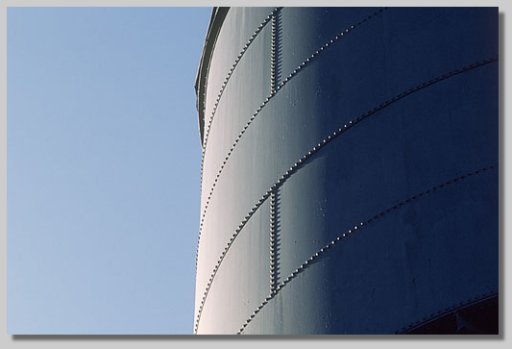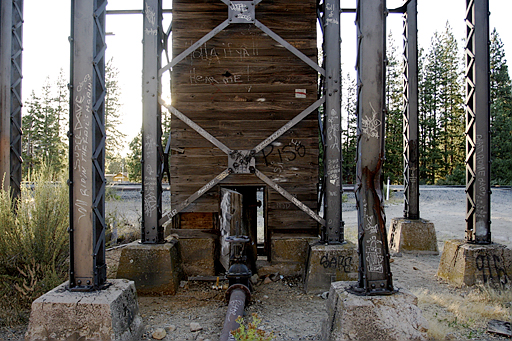

For a hundred years the most well-known railroad feature and a prominent landmark at Black Butte was the historic water tank, built in 1926 by the Southern Pacific at the time of the construction of the “Natron cut-off” line to Klamath Falls. The tank provided water for steam locomotives that would stop after making it up the steep grade from Dunsmuir, or on their way down the grade. Only a small number of these water tanks remain along the former SP lines. The tank at Black Butte, owned by Union Pacific, remained operational until 2026 and was occasionally used for watering steam locomotives during special excursions or for watering maintenance-of-way equipment.
Our attempt to save the tower

On September 14, 2026, Union Pacific demolished the 100-year-old Black Butte water tower. The BBCRC had been working on a proposal to save it and had considerable support from local and regional UP staff. Our proposal included a structural summary of the empty tower, which was carrying only about five percent of the load it was designed for. Unfortunately, UP’s legal department in Omaha, unappreciative of local history and seemingly concerned only about liability, refused to accept our proposal and ordered the demolition.
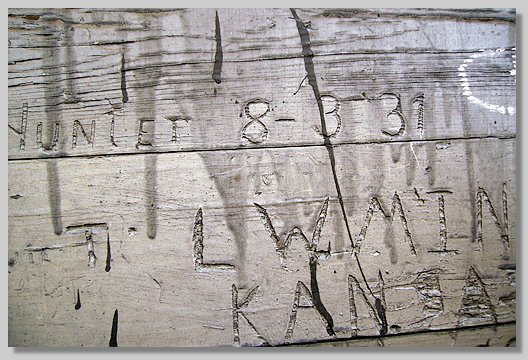
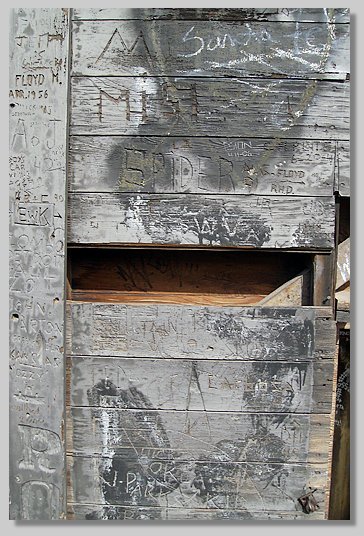
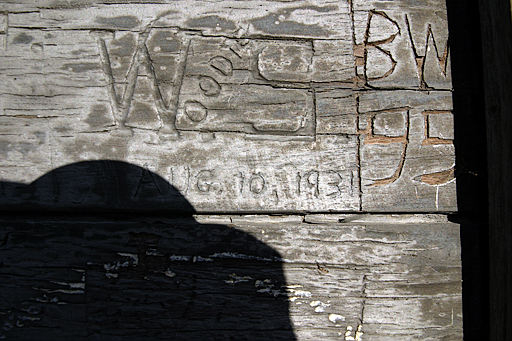
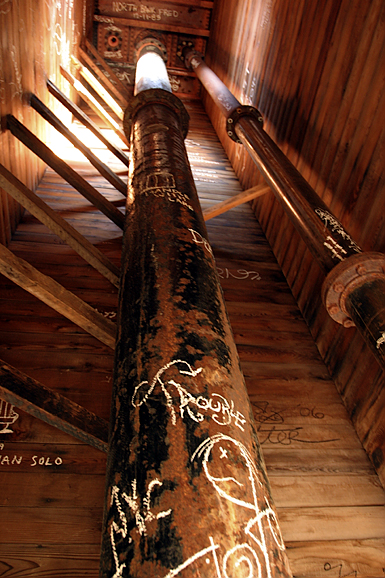
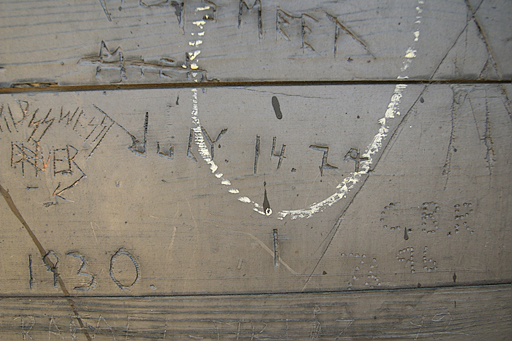
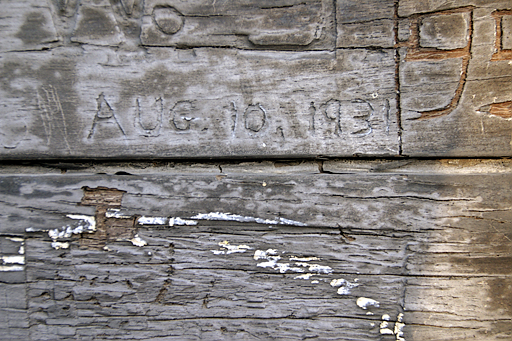
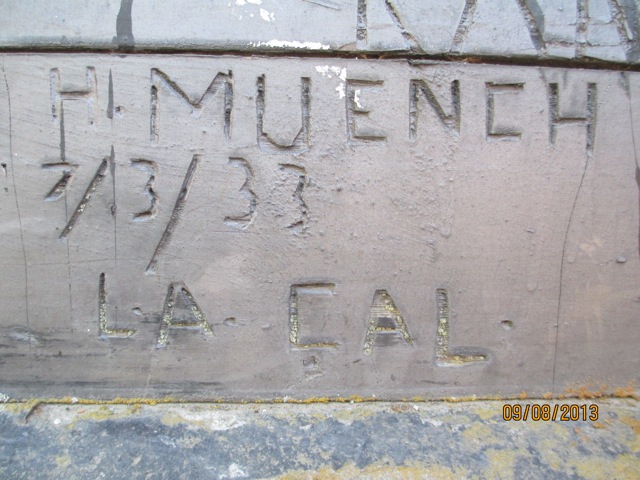
The BBCRC was able to save all of the historic wood pieces from the tower, many covered in tramp and hobo monikers from over a hundred years past. The water tower was the iconic symbol of the BBCRC, and its loss is felt deeply in our community. A “100 Year Tribute to the Black Butte Water Tower” art show ran in our Shasta car gallery in the fall of 2026. See also our news post from the day of the demolition.
How the tank was built

The tank, 1926–2026

Above photo shows a remnant of rail dating from 1880 used to construct the reservoir behind the water tank. In 1880 the Central Pacific imported a large amount of rail from Krupp, a German steel producer, at a time when the US didn’t yet have the capacity to produce large amounts of steel rail.
The tank was famous for its historic hobo “tags” dating back to the 1930s and was featured in documentary films. The photos below document the tank as it stood.